Blog
The Art of Chikankari: Lucknow's Embroidered Legacy
The Art of Chikankari: Lucknow's Embroidered Legacy
What makes Chikankari so special is its detailed technique. Artisans use over 30 different stitches—such as bakhiya (shadow work), phanda (knot), murri, and jaali—to create floral and geometric motifs. Each piece is handcrafted over several days, sometimes weeks, highlighting the artisan’s precision and patience.
The Craft of Precision
What makes Chikankari so special is its detailed technique. Artisans use over 30 different stitches—such as bakhiya (shadow work), phanda (knot), murri, and jaali—to create floral and geometric motifs. Each piece is handcrafted over several days, sometimes weeks, highlighting the artisan’s precision and patience.
Fabrics and Styles
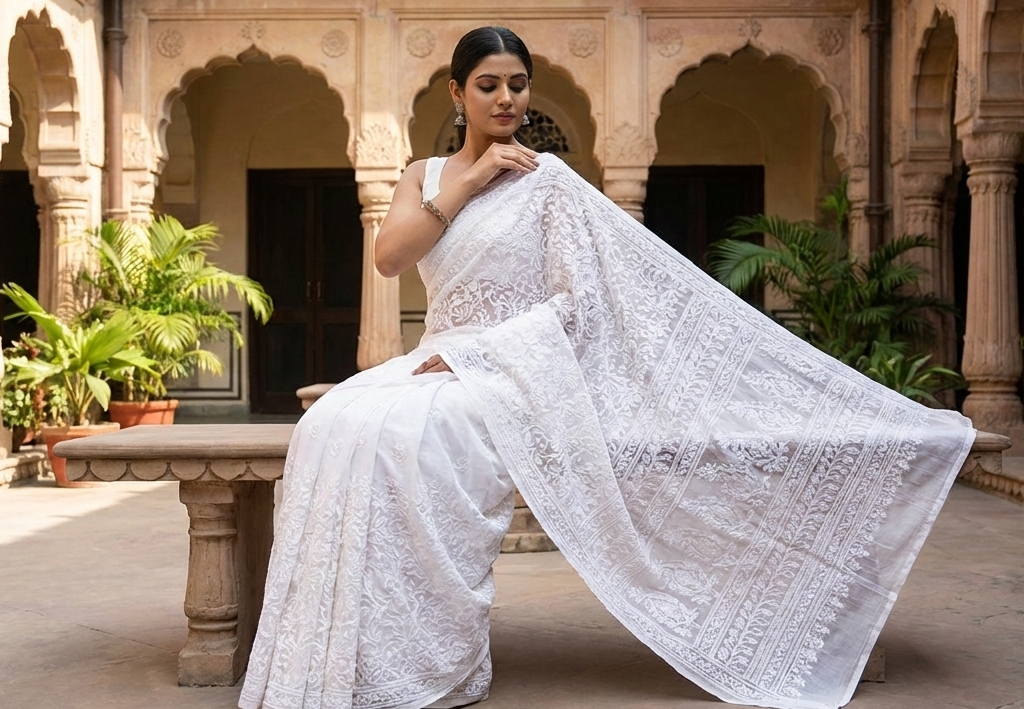
Originally done on muslin, today's Chikankari is available on various fabrics like cotton, georgette, silk, chiffon, and organza. Modern designers are reimagining Chikankari sarees, combining them with contemporary silhouettes while preserving their authenticity.
The Allure of Subtlety
Unlike heavily embellished sarees, Chikankari exudes quiet grace. It’s ideal for summer weddings, festive brunches, and office events alike. The pastel palette and airy texture of these sarees make them a timeless wardrobe addition.
Supporting a Heritage
By choosing a Chikankari saree, you're not only embracing a style legacy but also supporting the artisan community of Lucknow. Each saree tells a story of heritage, craft, and cultural pride.